
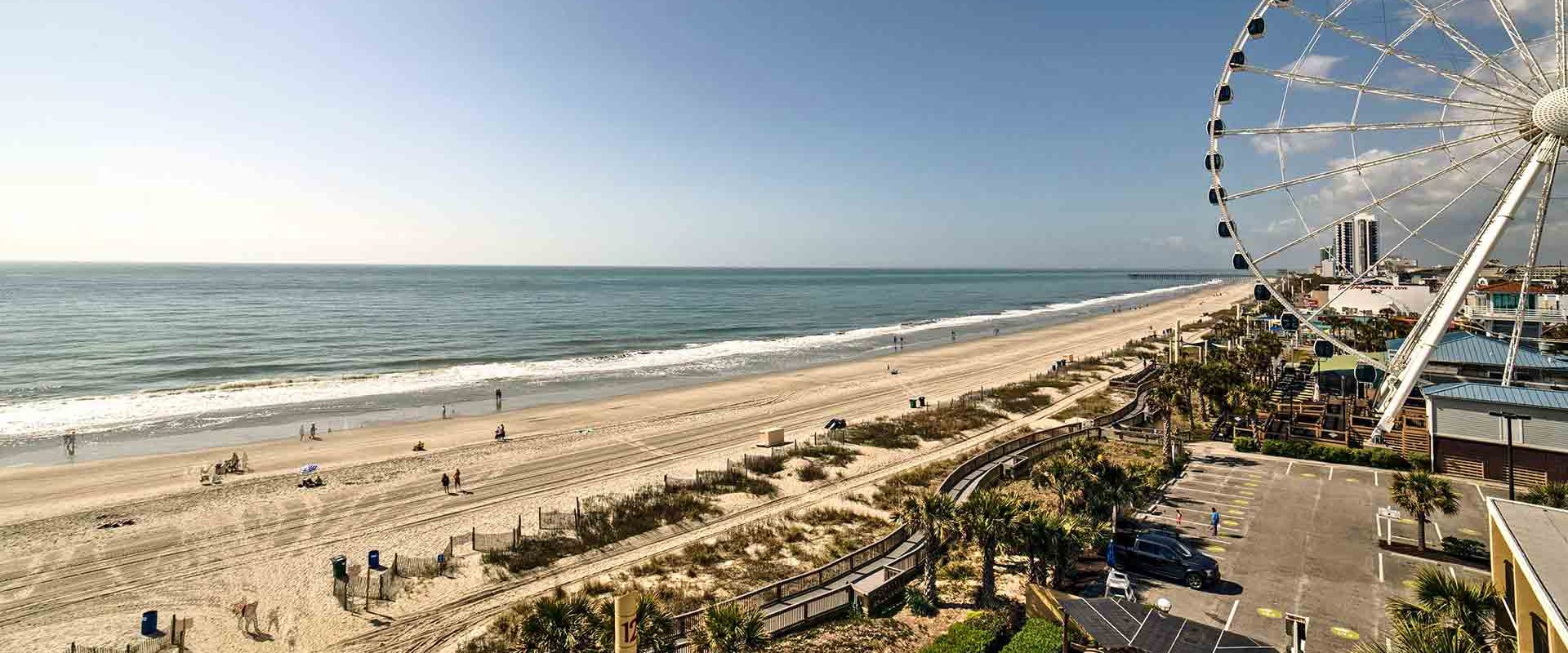
The Challenge of Coastal Corrosion and Salt Air
For homeowners along the Grand Strand, the primary enemy of any exterior home component is salt air. In Myrtle Beach, the high saline content in the atmosphere can lead to rapid oxidation and degradation of traditional building materials. When selecting mobile home skirting, you aren’t just looking for aesthetic appeal; you are looking for chemical resistance.
Standard metal skirting, while durable in inland South Carolina, can struggle in coastal zones if not specifically treated for marine environments. Salt can cause untreated aluminum or steel to pit and corrode within years. Instead, coastal residents should prioritize non-porous materials like high-grade vinyl or fiber cement, which can withstand the relentless “salt spray” without losing structural integrity or color vibrancy.
High-Wind Resistance and Hurricane Preparedness
Myrtle Beach is no stranger to tropical storms and hurricane-force winds. Your skirting acts as a critical windbreaker for your home’s underbelly. If skirting panels are loosely installed or made of flimsy materials, a strong gust can rip them away, exposing your plumbing and insulation to wind-driven rain and debris.
To ensure your home remains protected, consider reinforced vinyl or engineered stone panels. These materials often come with specialized “locking” systems designed to stay anchored during high-wind events. Furthermore, ensuring that your skirting is properly braced—rather than just hung—will prevent the “rattling” noise common during our coastal storms. If your current skirting feels flimsy, it may be time for an upgrade before the next storm season.
Managing Coastal Humidity and Under-Home Ventilation
Humidity in South Carolina is a year-round factor, but in Myrtle Beach, the proximity to the ocean creates a unique microclimate. If your skirting does not allow for proper “breathability,” moisture will trap under your home, leading to mold, mildew, and wood rot in your floor joists.
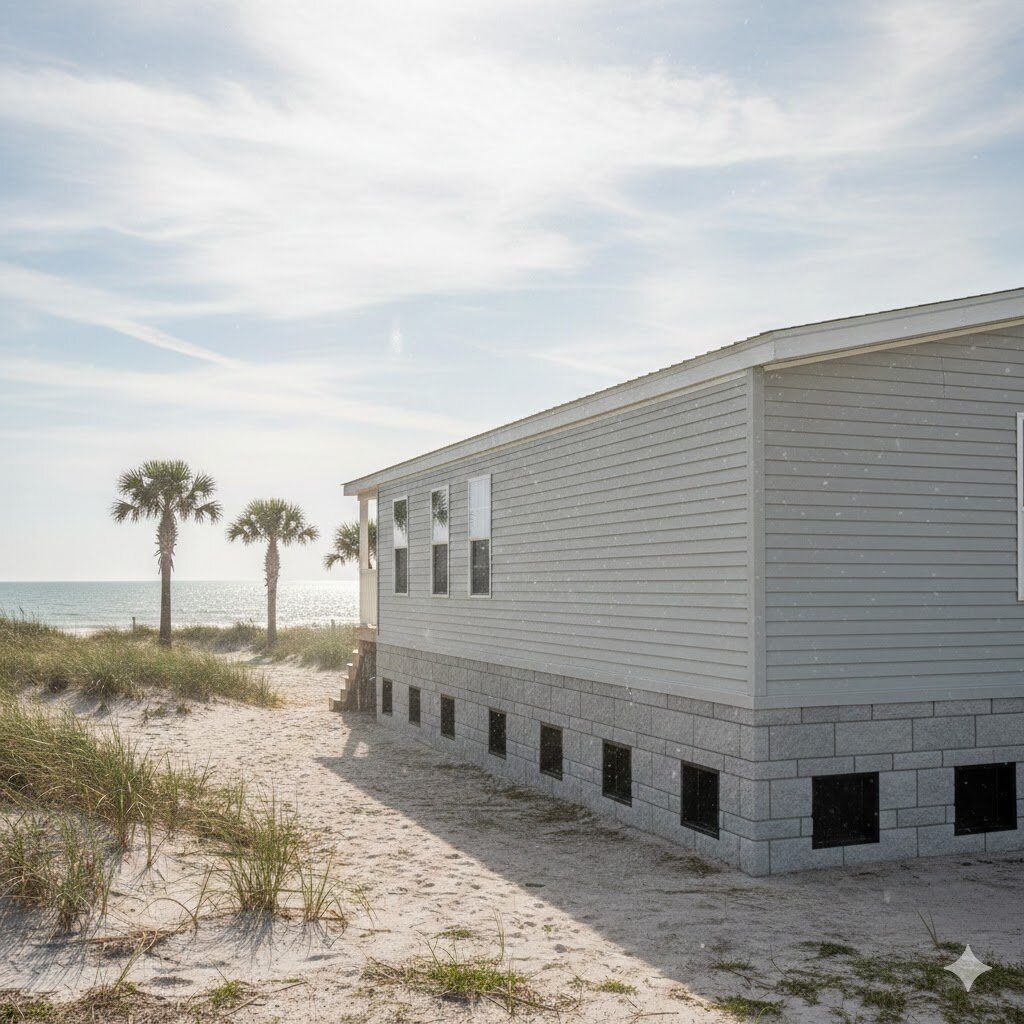
In coastal zones, the standard “1 foot of vent per 150 square feet” rule is the bare minimum. We often recommend increasing ventilation or using lattice-style skirting in non-flood zones to maximize airflow. Proper ventilation doesn’t just protect the wood; it also helps regulate the temperature of your crawlspace, preventing your AC unit from overworking during our humid July afternoons.
Related Article: